Timing is everything. Whether you’re a musician, athlete, dancer, or professional navigating daily tasks, mastering rhythm and tempo control can transform your performance from mediocre to magnificent.

The ability to maintain consistent timing isn’t just a natural talent—it’s a skill that can be developed through awareness, practice, and the right techniques. This comprehensive guide will walk you through everything you need to know about tempo control, providing you with an actionable checklist to achieve perfect timing in any context.
🎵 Understanding the Foundation of Tempo Control
Before diving into practical strategies, it’s essential to understand what tempo control actually means. Tempo refers to the speed or pace at which an activity occurs, measured in beats per minute (BPM) in musical contexts or through other metrics in different disciplines.
Tempo control awareness is your internal ability to perceive, maintain, and adjust timing consistently. This skill relies on three core components: your internal clock, your sensory feedback mechanisms, and your muscle memory. When these elements work in harmony, you achieve what experts call “temporal precision.”
Research shows that our brains have dedicated neural networks for processing rhythm and timing. The cerebellum, basal ganglia, and supplementary motor area all play crucial roles in how we perceive and execute timed movements. Understanding this biological foundation helps you appreciate why tempo control requires both mental focus and physical training.
The Pre-Performance Tempo Assessment
Before any performance or activity requiring precise timing, conducting a thorough self-assessment sets the stage for success. This initial check ensures you’re mentally and physically prepared to maintain consistent tempo.
Mental Readiness Indicators
Your mental state significantly impacts your ability to control tempo. Ask yourself these critical questions: Are you fully present and focused? Is your mind clear of distracting thoughts? Can you feel your natural pulse without external cues?
Anxiety and stress typically cause people to rush, while fatigue leads to dragging. Recognizing your current emotional state allows you to compensate accordingly. Take three deep breaths and establish a baseline awareness of your internal rhythm before beginning any timed activity.
Physical Preparation Checklist
Your body must be properly prepared to execute consistent timing. Check for physical tension in your shoulders, neck, jaw, and hands—these are common areas where stress manifests and disrupts smooth execution.
Ensure your posture supports efficient movement. Whether sitting or standing, alignment affects your ability to maintain steady rhythm. Poor posture restricts breathing and creates unnecessary physical interference that throws off your timing.
⏱️ Developing Your Internal Metronome
The most reliable source of tempo control comes from within. While external tools like metronomes and click tracks are valuable training aids, your ultimate goal is to internalize rhythm so completely that you become your own perfect timekeeper.
The Pulse Connection Exercise
Start by finding your resting heart rate. Place two fingers on your wrist or neck and feel your pulse for 30 seconds. This natural rhythm serves as your biological baseline—a constant tempo you carry with you always.
Practice subdividing your pulse into different patterns. Feel one heartbeat, then imagine dividing it into two equal parts, then three, then four. This exercise builds the neural pathways necessary for complex tempo control.
Counting Systems That Actually Work
Effective counting isn’t just about numbers—it’s about creating a verbal rhythm that supports your internal timing. Different disciplines use different systems, but the principle remains the same: your counting should be absolutely even and consistent.
Musicians often count “1-and-2-and-3-and-4-and” to subdivide beats. Dancers might use “5-6-7-8” to prepare for movement. Athletes count repetitions with consistent spacing. Find the system that works for your activity and practice it until it becomes automatic.
The Environmental Awareness Factor
Your surroundings significantly impact your ability to maintain tempo. Temperature, acoustics, visual distractions, and even air quality can subtly influence your timing perception.
Acoustic Considerations
Sound travels at different speeds and reflects differently depending on your environment. A room with hard surfaces creates more echo and can make timing feel rushed. Conversely, heavily dampened spaces can make tempos feel slower than they actually are.
When practicing or performing, spend a few moments acclimatizing to the acoustic environment. Play or move at your target tempo and notice how it feels and sounds in that specific space. Make mental adjustments to compensate for the room’s characteristics.
Visual and Physical Distractions
Movement in your peripheral vision, flickering lights, or uncomfortable temperatures all tax your cognitive resources, leaving less mental bandwidth for precise tempo control. Identify and minimize these distractions whenever possible.
Create a pre-performance routine that includes scanning your environment for potential disruptions. This awareness allows you to mentally prepare for distractions rather than being thrown off by them unexpectedly.
📊 The Tempo Control Awareness Checklist
Here’s your comprehensive checklist for maintaining perfect timing across any activity. Use this before, during, and after performances to identify areas for improvement.
| Category | Checkpoint | Assessment Method |
|---|---|---|
| Mental State | Focus Level | Rate concentration 1-10 |
| Mental State | Anxiety/Stress | Notice tension patterns |
| Physical State | Muscle Tension | Body scan for tightness |
| Physical State | Breathing Pattern | Observe depth and regularity |
| Internal Rhythm | Pulse Awareness | Can you feel your heartbeat? |
| Internal Rhythm | Subdivision Clarity | Count subdivisions evenly |
| External Factors | Environmental Distractions | Identify potential disruptions |
| External Factors | Acoustic Properties | Test timing in the space |
🎯 Advanced Tempo Control Techniques
Once you’ve mastered the basics, these advanced strategies will elevate your timing precision to professional levels.
The Anchor Beat Method
This technique involves identifying specific “anchor points” within your rhythm where you consciously verify your tempo. Rather than trying to maintain awareness on every single beat (which is mentally exhausting), you check in at strategic moments.
For example, in a musical phrase, you might anchor on beat one of each measure. In a workout routine, you might anchor on every fifth repetition. These checkpoint moments allow you to course-correct before timing errors accumulate.
Tempo Gradation Practice
The ability to intentionally speed up or slow down while maintaining control separates amateurs from experts. Practice this by establishing a comfortable tempo, then gradually increasing speed by 5 BPM increments while maintaining the same quality of execution.
This exercise builds tremendous control because it forces you to adjust your internal metronome consciously. You develop the ability to feel subtle tempo differences, which makes maintaining any single tempo much easier.
Recording and Analysis
One of the most powerful tools for improving tempo control is recording yourself and analyzing the results. What you feel during performance often differs significantly from objective reality.
Use audio or video recording to capture your work, then listen or watch with a metronome running alongside. Mark moments where you rush or drag. Patterns will emerge—perhaps you consistently speed up during challenging sections or slow down when fatigued. This awareness is the first step toward correction.
Technology as Your Tempo Training Partner
Modern technology offers incredible resources for developing tempo control. While the goal is to internalize rhythm, strategic use of apps and devices accelerates your learning curve dramatically.
Metronome Applications
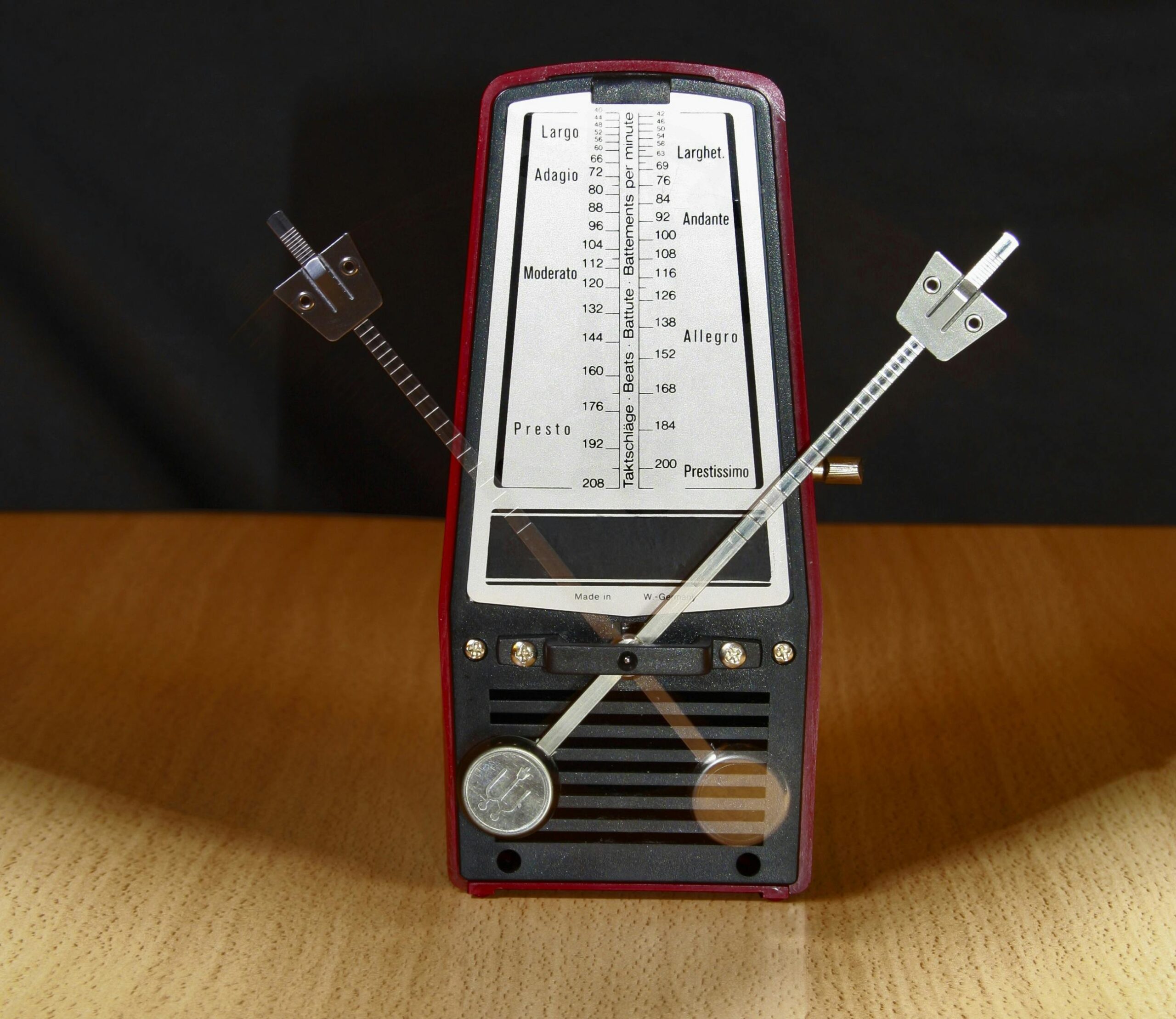
Digital metronomes have evolved far beyond simple clicking. Today’s apps offer visual cues, subdivision options, tempo trainers that gradually increase or decrease speed, and even recording features that let you practice along with yourself.
The most effective approach is using a metronome as a diagnostic tool rather than a crutch. Practice with it to identify tempo inconsistencies, then practice without it to develop independence. Alternate between guided and free practice in every session.
Biofeedback and Wearable Technology
Wearable devices that monitor heart rate, movement, and even brain activity provide real-time feedback about your physiological state during performance. This data helps you understand the connection between your physical condition and tempo control.
When you notice your heart rate increasing during a performance, you can consciously adjust to prevent the associated tempo rushing. This awareness transforms unconscious physiological responses into manageable variables.
🧠 The Psychology of Perfect Timing
Tempo control isn’t purely technical—psychological factors play an enormous role in your ability to maintain consistent timing under pressure.
Managing Performance Anxiety
Nervousness almost universally causes tempo acceleration. The adrenaline surge increases heart rate, speeds up your internal clock, and creates a sense of urgency that manifests as rushing.
Combat this by practicing anxiety simulation. Deliberately create stressful practice conditions—perform for friends, record yourself, or set artificial high-stakes scenarios. When you learn to maintain tempo despite nervous feelings, actual performances become much more manageable.
The Confidence-Timing Connection
Uncertain performers often slow down, as if subconsciously buying time to figure out what comes next. Conversely, overconfident performers may rush, eager to showcase their abilities. Optimal tempo control requires balanced confidence—trusting your preparation while remaining present and attentive.
Build genuine confidence through thorough preparation. When you’ve practiced sufficiently at the correct tempo, your body knows what to do, and you can focus on maintaining awareness rather than executing technique.
Troubleshooting Common Tempo Problems
Even experienced performers encounter timing challenges. Recognizing common problems and having solutions ready prevents minor issues from becoming major setbacks.
The Rushing Syndrome
If you consistently play, move, or work faster than intended, you’re experiencing rushing—one of the most common tempo control issues. This typically stems from excitement, anxiety, or insufficient subdivision awareness.
The solution involves consciously feeling the space between beats. Instead of thinking about the notes or movements, focus on the silence or stillness between actions. This counterintuitive approach naturally slows you down to the correct tempo.
The Dragging Dilemma
Dragging—performing slower than intended—usually results from fatigue, overthinking, or insufficient energy in your execution. It can also stem from fear of mistakes, causing you to subconsciously slow down for extra control.
Combat dragging by imagining a slight forward momentum, as if your rhythm is always leaning slightly toward the next beat. Think “through” each action rather than “on” it, maintaining continuous motion rather than stopping and starting.
Tempo Drift Over Time
Perhaps the most insidious timing problem is gradual tempo drift—slowly speeding up or slowing down over an extended performance without realizing it. This happens when you lose connection with your reference tempo.
Establish regular mental checkpoints where you consciously reconnect with your target tempo. Every few minutes (or measures, or repetitions), ask yourself: “Am I still at the correct speed?” This periodic awareness prevents accumulated drift.
💪 Building Long-Term Tempo Mastery
Exceptional tempo control develops over months and years of consistent practice. These long-term strategies ensure continuous improvement throughout your journey.
Daily Rhythm Exercises
Dedicate just five minutes daily to pure tempo work. This might involve clapping steady quarter notes at different speeds, walking in time with a metronome, or simply counting evenly while doing everyday activities.
The consistency of daily practice matters more than the duration. Your brain strengthens timing neural pathways through regular activation, making rhythm awareness increasingly automatic.
Cross-Training for Timing
Rhythm skills transfer across disciplines. Musicians benefit from dance, athletes improve through musical training, and everyone gains from activities requiring precise timing. This cross-training builds robust timing abilities that work across contexts.
Explore different rhythm-based activities outside your primary discipline. The novelty challenges your brain in new ways while reinforcing fundamental tempo control principles.
Progressive Difficulty Challenges
As your skills improve, continuously increase the difficulty of your tempo challenges. This might mean working with more complex rhythms, faster or slower tempos, longer durations, or more distracting environments.
Keep a training log documenting your tempo control challenges and successes. Reviewing your progress provides motivation and helps identify patterns in your development.
The Integration Phase: Making Perfect Timing Automatic
The ultimate goal isn’t conscious tempo control—it’s unconscious competence where perfect timing happens naturally without deliberate thought. This integration phase represents true mastery.
Reach this level by gradually reducing your conscious attention on timing while maintaining accuracy. Start by focusing intensely on tempo, then slowly shift attention to other performance elements while monitoring whether timing remains solid.
This is similar to learning to drive—initially, every action requires conscious thought, but eventually, you navigate complex traffic while holding conversations. Your timing should become this automatic, functioning reliably while your conscious mind focuses on expression, strategy, or creativity.
Regular assessment ensures your unconscious timing remains accurate. Periodically record yourself and verify with measurement tools that your natural timing aligns with your intentions. If drift occurs, return to conscious practice until accuracy is re-established.
🎪 Performing Under Pressure: The Ultimate Test
The true measure of tempo control mastery is maintaining perfect timing in high-pressure situations. Competition, performances, important meetings, or critical moments test whether your skills hold under stress.
Prepare for these moments by simulating pressure during practice. Create artificial stakes, invite observers, or set consequences for timing errors. This stress inoculation builds resilience, making actual high-pressure situations feel familiar rather than overwhelming.
Develop pre-performance rituals that center your timing awareness. This might include breathing exercises synchronized to your target tempo, mental rehearsal at the correct speed, or physical warm-ups that establish your rhythm.
Remember that even masters experience timing challenges under extreme pressure. The difference is their ability to recognize and correct issues quickly rather than never making mistakes. Cultivate this recovery skill alongside prevention strategies.
Your journey to tempo mastery is personal and ongoing. Use this checklist as a living document, adapting it to your specific needs and adding insights from your own experience. Perfect timing isn’t a destination you reach but a skill you continuously refine, bringing increasing precision, confidence, and artistry to everything you do. Start implementing these strategies today, and you’ll notice improvements in your temporal awareness within weeks, with profound mastery developing over your lifetime of practice.