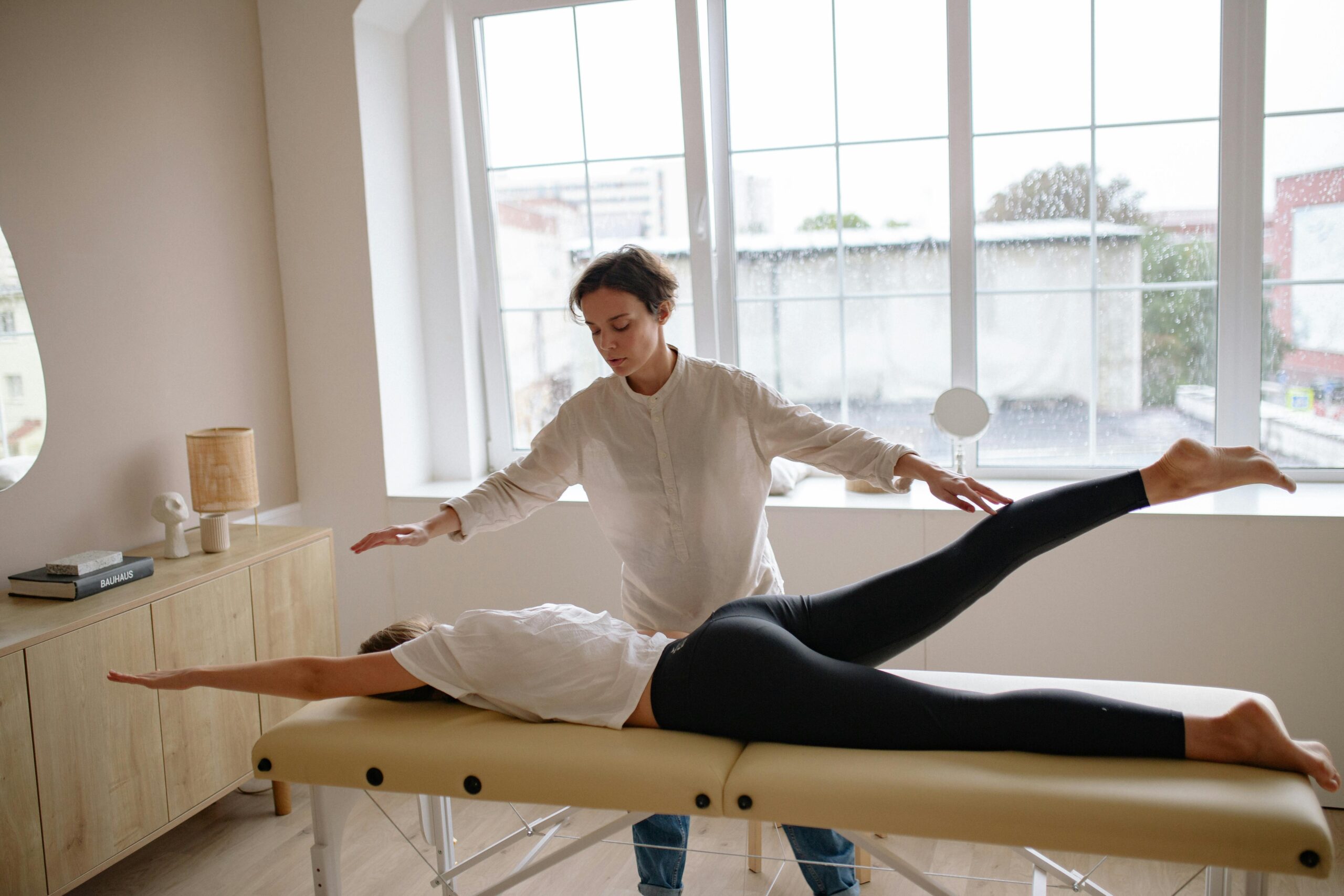
Building a strong foundation starts with understanding how to regress exercises effectively. Lower-body training is essential for functional movement, athletic performance, and everyday activities, but not everyone can—or should—start with advanced variations.

Exercise regressions are scaled-down versions of more complex movements that allow individuals to develop proper movement patterns, build foundational strength, and reduce injury risk. Whether you’re recovering from an injury, new to strength training, or working around limitations, mastering these progressions is crucial for long-term success and sustainability in your fitness journey.
🎯 Understanding Exercise Regressions and Their Importance
Exercise regressions are not signs of weakness—they’re strategic tools for building strength safely and effectively. A regression maintains the fundamental movement pattern of an exercise while reducing complexity, load, range of motion, or stability demands. This approach allows your body to adapt gradually while minimizing injury risk.
The lower body comprises some of the largest and most powerful muscle groups in the human body. The quadriceps, hamstrings, glutes, and calves work together to produce force, absorb impact, and stabilize joints during movement. When these muscles are underdeveloped or when movement patterns are compromised, injury risk increases significantly.
Many people rush into advanced lower-body exercises without establishing proper foundations. This creates compensatory movement patterns that can lead to knee pain, lower back issues, and hip dysfunction. By starting with appropriate regressions, you build neuromuscular control and tissue resilience that supports more demanding training later.
The Squat Pattern: Building Block of Lower-Body Strength
The squat is arguably the most fundamental lower-body movement pattern. It appears in countless daily activities—sitting down, standing up, picking things off the floor—yet many people struggle to perform it correctly. Proper squat regressions address mobility limitations, stability issues, and strength deficits systematically.
Box Squat: Depth Control and Confidence Building
The box squat is an excellent regression that provides a physical reference point for depth and teaches proper sitting-back mechanics. By squatting to a box or bench, you eliminate uncertainty about how low to go and reduce fear of falling backward. This regression is particularly valuable for those with knee pain or balance concerns.
Start with a box height that allows you to maintain a neutral spine and keep your knees tracking over your toes. As mobility and strength improve, gradually lower the box height. Focus on controlled descent, light contact with the box, and driving through your entire foot to stand.
Goblet Squat: Counterbalance and Posture Enhancement
The goblet squat uses a weight held at chest level to create a counterbalance that makes it easier to maintain an upright torso. This front-loaded position naturally encourages proper depth and reduces forward lean that often causes lower back strain. The goblet squat also provides excellent feedback for core engagement.
Hold a dumbbell or kettlebell close to your chest with both hands. Keep your elbows pointed down and chest proud. This position helps you maintain balance and teaches the relationship between upper-body tension and lower-body stability—a connection that transfers to all squatting variations.
Wall Squat: Mobility Assessment and Development
The wall squat, performed facing a wall at various distances, is both an assessment tool and a regression. It forces you to squat without excessive forward lean, immediately revealing mobility restrictions in the ankles, hips, or thoracic spine. This variation builds awareness of your body’s position in space.
Start with your toes several inches from the wall and gradually move closer as your movement quality improves. If you can squat with your toes touching the wall while keeping your heels down and maintaining depth, you have excellent squat mobility.
Hinge Movements: Protecting Your Spine While Building Posterior Strength
The hip hinge is essential for deadlifts, swings, and bending movements. Poor hinge mechanics—often characterized by excessive spinal flexion—are a primary contributor to back injuries. Effective regressions teach proper loading of the posterior chain while keeping the spine neutral.
Romanian Deadlift (RDL): Hamstring Loading with Reduced Range
The Romanian deadlift limits the range of motion compared to conventional deadlifts, making it easier to maintain a neutral spine throughout the movement. By starting from a standing position and only lowering the weight to mid-shin level (or wherever you can maintain back position), you reduce technical demands while still loading the hamstrings and glutes effectively.
Focus on pushing your hips backward while maintaining a slight knee bend. The bar should travel in a vertical line close to your legs. Stop the descent when you feel a stretch in your hamstrings or when your back begins to round—whichever comes first.
Single-Leg Romanian Deadlift: Stability and Balance Integration
The single-leg RDL is technically a regression in terms of load capacity but adds a significant balance and stability component. This variation is excellent for identifying and correcting asymmetries between sides while building hip stability that transfers to running, jumping, and change-of-direction movements.
Start with bodyweight or very light loads. Focus on keeping your hips level throughout the movement—avoid opening the hip of the working leg. Your elevated leg should extend behind you in line with your torso as you hinge forward, creating a “T” shape at the bottom position.
Hip Hinge with Dowel: Movement Pattern Mastery
Before loading any hinge pattern with significant weight, master the movement with a dowel or PVC pipe held against your back. The dowel should maintain contact with your head, upper back, and tailbone throughout the entire movement—this ensures spinal neutrality.
This regression provides immediate tactile feedback. If any contact point breaks, you know you’ve compromised your spine position. Practice this pattern daily if needed until the movement becomes automatic and you can maintain the three points of contact throughout a full range of motion.
🦵 Lunge Variations: Stability, Balance, and Unilateral Strength
Lunges and split-stance exercises develop single-leg strength, balance, and the ability to control force in multiple directions. Because life and sports rarely involve perfectly bilateral movements, mastering lunge regressions is essential for functional strength and injury prevention.
Split Squat: Static Stability Before Dynamic Movement
The split squat eliminates the balance challenge of stepping lunges while maintaining the unilateral strength benefits. By keeping your feet in a fixed position, you can focus entirely on proper mechanics—knee tracking, torso position, and weight distribution—without worrying about maintaining balance during transitions.
Set up with feet hip-width apart in a split stance, front foot flat and back heel elevated. Lower your body by bending both knees simultaneously until your back knee approaches the ground. Your front shin should remain relatively vertical, and your torso should stay upright. This position protects the front knee from excessive forward translation.
Reverse Lunge: Knee-Friendly Stepping Pattern
The reverse lunge is generally easier on the knees than forward lunges because it reduces forward momentum and shear forces on the front knee. Stepping backward also feels more natural for most people and allows for better control throughout the movement.
From a standing position, step one foot backward and lower your body until both knees form approximately 90-degree angles. Push through your front heel to return to standing. The backward step reduces the deceleration demands on your front leg compared to forward lunges.
Elevated Split Squat: Increasing Range and Intensity Safely
Once you’ve mastered ground-level split squats, elevating the front foot on a small platform (2-4 inches) increases the range of motion and places greater demand on the front leg. This regression bridges the gap between basic split squats and more advanced Bulgarian split squats.
The elevation allows your back knee to travel lower without compromising form, increasing time under tension for the front leg. This variation is excellent for developing knee and hip strength through extended ranges of motion while maintaining stability.
Building Bulletproof Ankles and Calves
The lower leg and ankle complex is often neglected in training programs, yet ankle stability and calf strength are foundational for all standing exercises. Weak or unstable ankles compromise every lower-body movement pattern and increase injury risk throughout the kinetic chain.
Seated Calf Raise: Soleus Isolation
The seated calf raise targets the soleus muscle, which lies beneath the gastrocnemius and is active primarily when the knee is bent. Strong soleus muscles are essential for walking, running, and maintaining ankle stability during squats and lunges.
Sit with your feet flat on the ground and a weight resting on your thighs just above your knees. Lift your heels as high as possible, pause briefly, then lower with control. The soleus is a slow-twitch dominant muscle that responds well to higher repetitions (15-25 reps).
Single-Leg Balance Progressions: Proprioception Development
Simple single-leg balance exercises are foundational regressions that improve proprioception and ankle stability. Start by standing on one leg for 30-second intervals. As this becomes easier, close your eyes, stand on an unstable surface, or add reaching movements to increase difficulty.
These exercises may seem basic, but they develop the neuromuscular control necessary for more complex movements. Strong proprioceptive awareness reduces ankle sprains and improves performance in all lower-body exercises.
⚡ Progressive Overload Strategies for Regressions
Regressions aren’t meant to be permanent solutions—they’re stepping stones to more advanced variations. Understanding how to progressively overload regression exercises ensures continued adaptation and prevents plateaus.
Progressive overload can be achieved through multiple variables beyond simply adding weight. Consider these strategies:
- Increase range of motion: Gradually work toward deeper squats or longer lunge strides as mobility improves
- Add tempo manipulations: Slow down the eccentric (lowering) phase to increase time under tension
- Increase volume: Add sets or repetitions before increasing load
- Reduce stability: Progress from two-leg to single-leg variations or from stable to unstable surfaces
- Add external load: Once movement quality is consistent, gradually increase resistance
The key is changing only one variable at a time. This allows you to identify which progressions your body responds to best and ensures that technique doesn’t deteriorate as difficulty increases.
Common Mistakes That Undermine Regression Effectiveness
Even with appropriate regressions, several common errors can limit progress or increase injury risk. Being aware of these pitfalls helps you extract maximum benefit from your training.
Progressing Too Quickly
The most common mistake is abandoning regressions before establishing true mastery. Moving to advanced variations before you’re ready reinforces poor movement patterns and increases injury risk. Stay with a regression until you can perform it with excellent technique for multiple sets without fatigue compromising form.
Ignoring Pain Signals
Regressions should reduce or eliminate pain, not work through it. Sharp pain, joint discomfort, or symptoms that worsen during exercise indicate you need a further regression or professional assessment. Muscle fatigue and metabolic discomfort are normal; joint pain is not.
Neglecting Mobility Work
Regressions help you work within current mobility limitations, but they shouldn’t replace dedicated mobility training. Incorporate targeted stretching and mobility exercises for the ankles, hips, and thoracic spine to expand your movement capacity over time.
Using Excessive Load
The purpose of regressions is to perfect movement patterns and build foundational strength. Using loads that are too heavy compromises form and defeats the purpose. Prioritize movement quality over ego—the strength gains will follow naturally.
🏋️ Creating a Balanced Lower-Body Regression Program
An effective lower-body program incorporates multiple movement patterns to ensure balanced development and reduce injury risk. Here’s a framework for structuring your training sessions:
| Movement Pattern | Primary Muscles | Regression Examples |
|---|---|---|
| Squat | Quadriceps, Glutes, Core | Box Squat, Goblet Squat, Wall Squat |
| Hinge | Hamstrings, Glutes, Erectors | Romanian Deadlift, Single-Leg RDL, Dowel Hinge |
| Lunge | Quadriceps, Glutes, Stabilizers | Split Squat, Reverse Lunge, Elevated Split Squat |
| Calf/Ankle | Gastrocnemius, Soleus | Seated Calf Raise, Single-Leg Balance |
A balanced session might include one exercise from each category, performed for 2-4 sets of 8-15 repetitions depending on your goals. Begin each session with a thorough warm-up including dynamic stretching and movement preparation specific to the exercises you’ll perform.
When to Seek Professional Guidance
While regressions are generally safe and accessible, certain situations warrant professional evaluation. If you experience persistent pain that doesn’t improve with appropriate regressions, have a history of significant lower-body injuries, or struggle to perform even basic movements without discomfort, consult a qualified physical therapist or strength coach.
Professional assessment can identify underlying mobility restrictions, strength imbalances, or movement dysfunction that may not be obvious without trained observation. A qualified professional can provide individualized regressions and progressions based on your specific needs and limitations.
Integrating Regressions Into Long-Term Training Plans
Exercise regressions aren’t just for beginners or injured athletes—they’re valuable tools for lifelong training. Even advanced athletes periodically return to regression exercises during deload weeks, when recovering from intense training blocks, or when refining technique.
Consider incorporating regression work as part of your warm-up routine, even when your main training involves advanced variations. This practice maintains movement quality, provides variety that reduces overuse injury risk, and serves as a regular assessment of your fundamental movement patterns.
Periodically film yourself performing basic regression exercises. This visual feedback helps you identify subtle form breakdowns and ensures that as you progress to heavier loads or more complex variations, you haven’t sacrificed the quality movement patterns you built with regressions.

Building Confidence Through Mastery
Beyond the physical benefits, appropriate regressions build psychological confidence that supports long-term training adherence. Successfully mastering movement patterns creates a sense of competence that motivates continued effort and experimentation with new challenges.
This confidence is particularly important for people returning to exercise after injury or those who feel intimidated by traditional gym environments. Starting with manageable regressions and experiencing consistent progress creates positive associations with training that support sustainable lifestyle changes.
Remember that strength training is a lifelong practice, not a destination. The foundations you build with regression exercises create a stable platform for decades of healthy, productive training. By respecting the process and prioritizing movement quality over arbitrary performance metrics, you develop resilience, capability, and confidence that extends far beyond the gym.
Lower-body strength is fundamental to functional independence, athletic performance, and injury resilience throughout life. By mastering effective exercise regressions, you ensure that your training supports rather than compromises long-term health and performance goals. Whether you’re just beginning your fitness journey or refining decades of experience, the principles of intelligent regression and progression remain constant—meet your body where it is today, challenge it appropriately, and trust the process of gradual adaptation.